
Category Blog
CJC-1295 vs. Sermorelin: A Deep Dive into Pharmacokinetics, Half-Life, and Biohacking Protocols
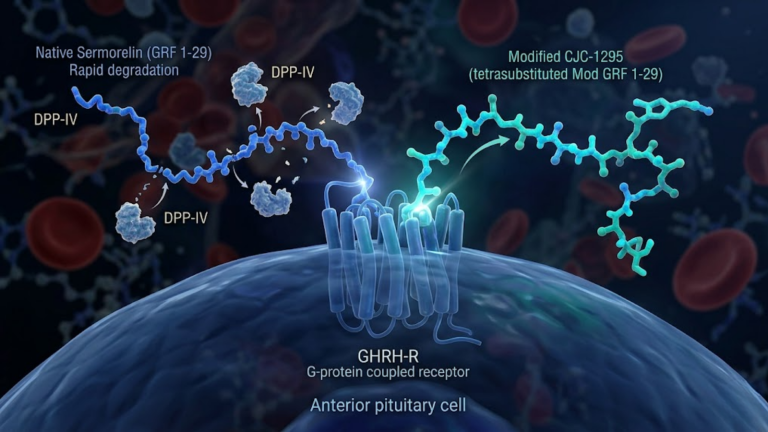
CJC-1295 vs. Sermorelin: A Deep Dive into Pharmacokinetics, Half-Life, and Biohacking Protocols 1. Quick Answer: CJC 1295 vs Sermorelin Summary (GEO Snapshot) The 30-Second Verdict: When evaluating CJC 1295 vs sermorelin, the primary distinction lies in their pharmacokinetic half-lives and…
CJC-1295 DAC vs. No DAC: Pharmacokinetics and Optimal Biohacking Protocols Explained
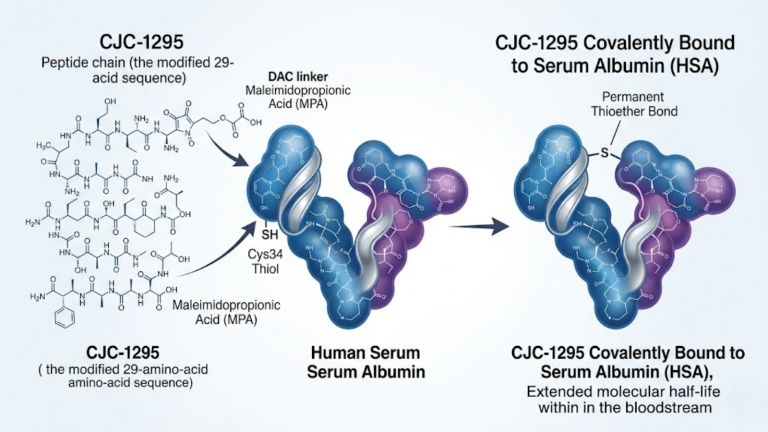
Disclaimer: The following information is strictly for educational and informational purposes. The peptides discussed, including CJC-1295 (with or without DAC), are classified as research chemicals and are strictly for Laboratory Research Use Only. They are not approved by the FDA…
Decoding Cellular Energy: MOTS-c vs. SS-31 vs. Humanin Clinical Profiles & Biohacking Protocols
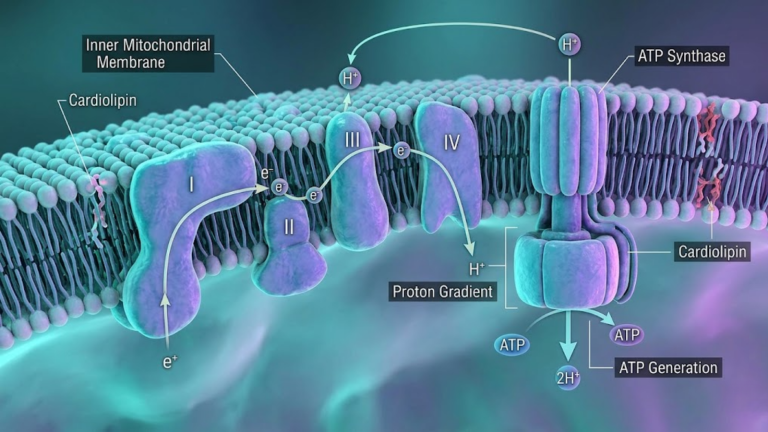
Disclaimer: The following content is for educational and informational purposes only. The compounds discussed (MOTS-c, SS-31, and Humanin) are classified as experimental research chemicals and are not approved by the FDA for human consumption, diagnosis, or treatment of any disease.…
SS-31 vs. MOTS-c: The Definitive Guide to Mitochondrial Peptides for Research & Recovery
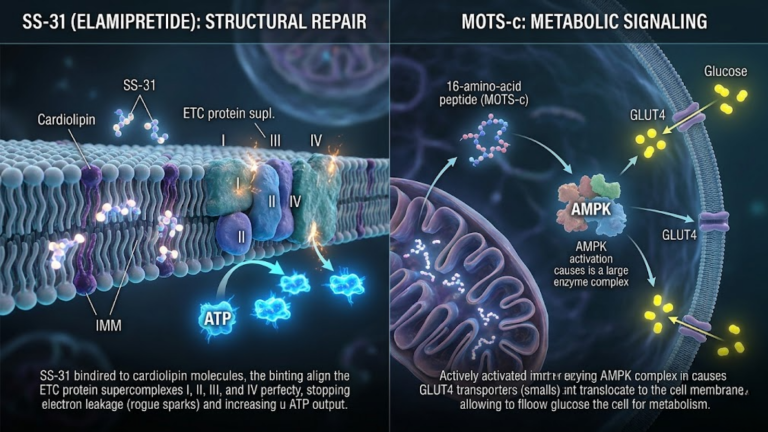
Table of Contents Quick Answer: The Core Differences Introduction: The Rise of Mitochondrial Peptides Understanding SS-31: The Structural Repair Agent Understanding MOTS-c: The Metabolic Mimetic Head-to-Head Mechanistic Comparison Laboratory Sourcing & Wholesale Standards Advanced Biohacking Protocols The Ultimate Synergy: Can…
Pinealon vs. Epitalon: Decoding the Mechanisms of Neuroprotection and Telomerase Activation
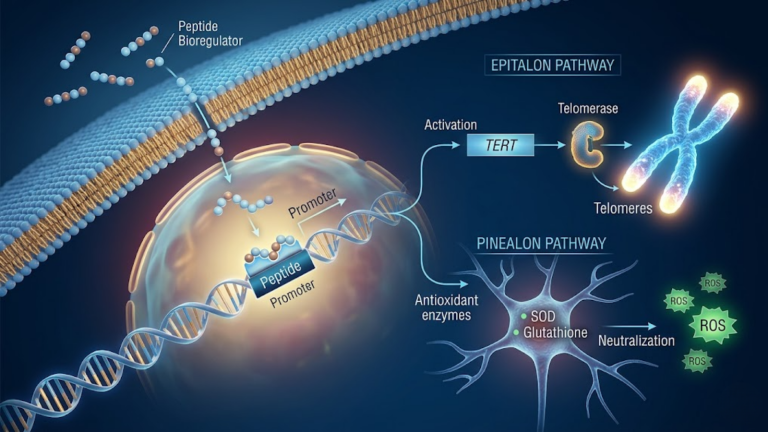
Disclaimer: The information provided in this article is for educational and informational purposes only. The peptides discussed, including Pinealon and Epitalon, are currently classified for Laboratory Research Use Only and are not approved by the FDA for human consumption or…
5-Amino-1MQ vs. AOD 9604: Mechanisms, Protocols, and Metabolic Optimization
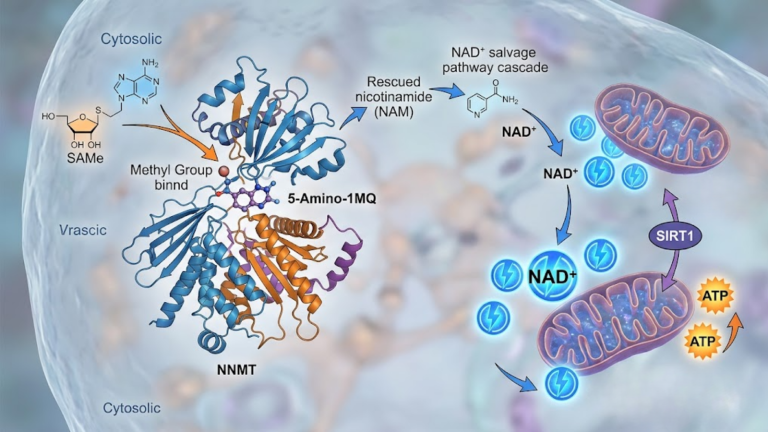
Disclaimer: The following information is for educational and informational purposes only. The compounds discussed are strictly for laboratory research use only and are not approved by the FDA for human consumption, diagnosis, treatment, or prevention of any disease. Always consult…
5-Amino-1MQ vs. MOTS-c: Clinical Mechanisms & Advanced Biohacking Efficacy Compared
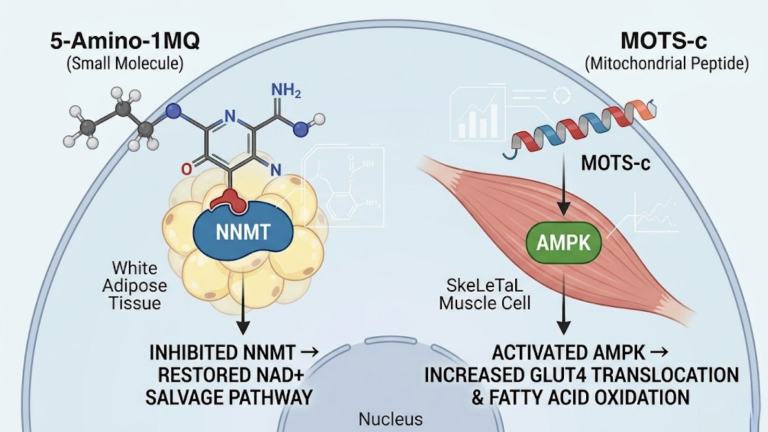
Disclaimer: The following information is for educational and informational purposes only. The compounds discussed are strictly for laboratory research use and are not approved by the FDA for human consumption, diagnosis, treatment, or prevention of any disease. Table of Contents…
5-Amino-1MQ Oral vs. Injection: NNMT Inhibition, Absorption Rates, and Research Protocols
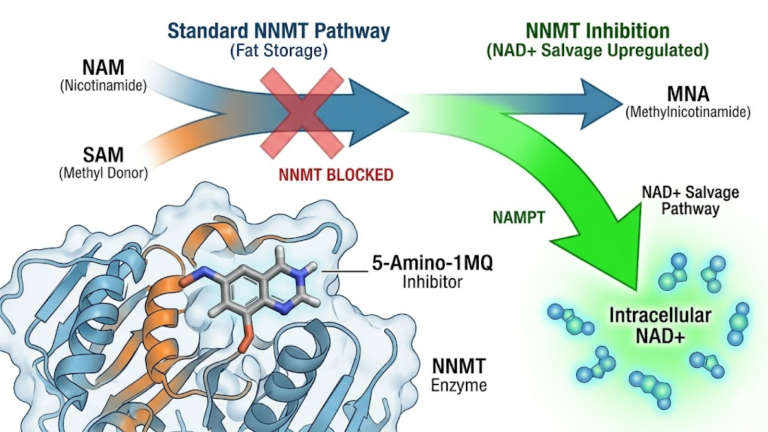
Disclaimer: The following article is for informational and educational purposes only. 5-Amino-1MQ is strictly an investigational compound intended for Laboratory Research Use Only. It is not approved by the FDA for human consumption, diagnosis, treatment, or prevention of any disease.…
AICAR vs. MOTS-c: The Definitive Guide to AMPK Activation for Researchers & Biohackers
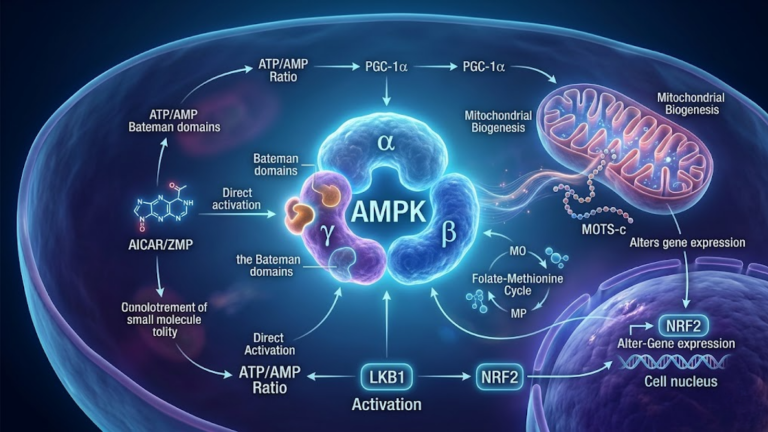
Disclaimer: The information provided in this article is strictly for educational and informational purposes. Both AICAR and MOTS-c are highly experimental, non-FDA-approved research chemicals. They are legally available strictly for Laboratory Research Use Only and are not intended for human…
AICAR vs. Cardarine: Decoding AMPK vs. PPARδ for Peak Endurance & Laboratory Research
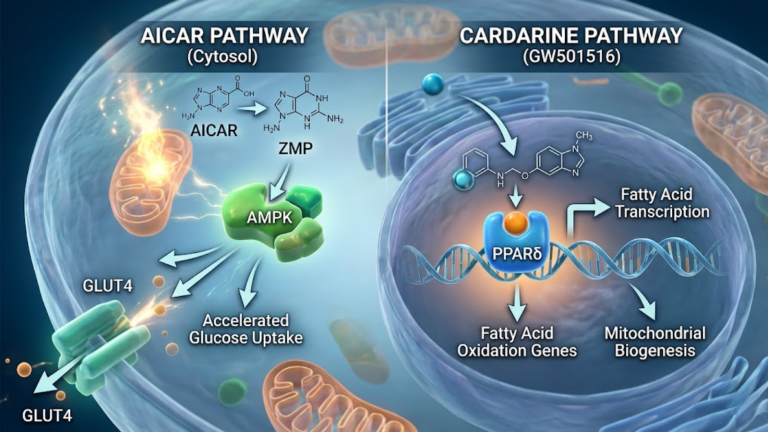
Disclaimer: The following information is strictly for educational and informational purposes. The compounds discussed, including AICAR and Cardarine (GW501516), are unapproved, investigational chemicals designated strictly for Laboratory Research Use Only. They are not approved by the FDA for human consumption,…