
Category Blog
GHK-Cu vs. Tretinoin: Cellular Mechanisms, Efficacy, and Advanced Synergistic Protocols
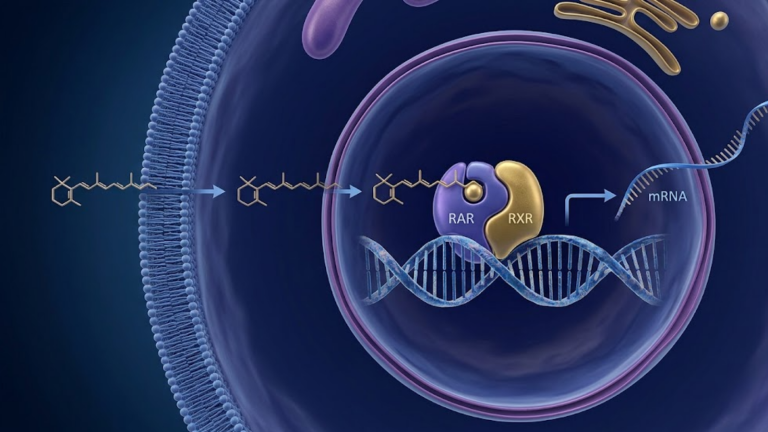
Disclaimer: The following clinical and biochemical analysis is provided for educational and informational purposes only. The compounds discussed, particularly in their raw or synthetic forms, may be designated for Laboratory Research Use Only and are not FDA-approved to prevent, treat,…
GHK-Cu vs. BPC-157: The Complete Guide to Clinical Mechanisms and Advanced Healing Protocols
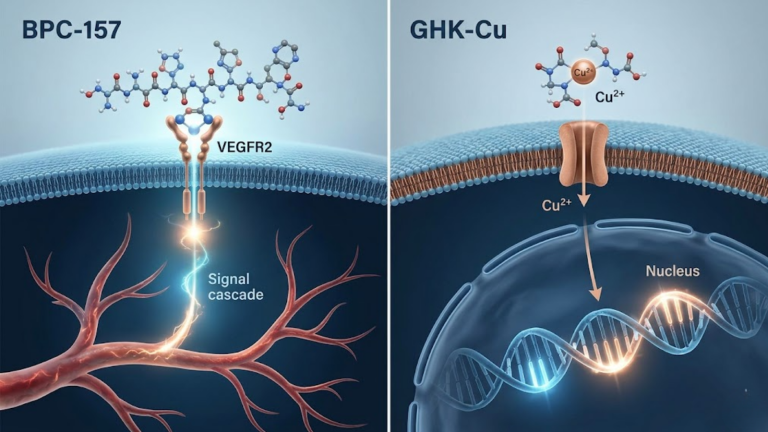
*Disclaimer: The following information is for educational and informational purposes only. The compounds discussed are for Laboratory Research Use Only and are not approved by the FDA for human consumption or treatment of any medical condition. Always consult a licensed…
Glow Protocol vs. Pure GHK-Cu: Molecular Mechanisms & Advanced Healing Protocols
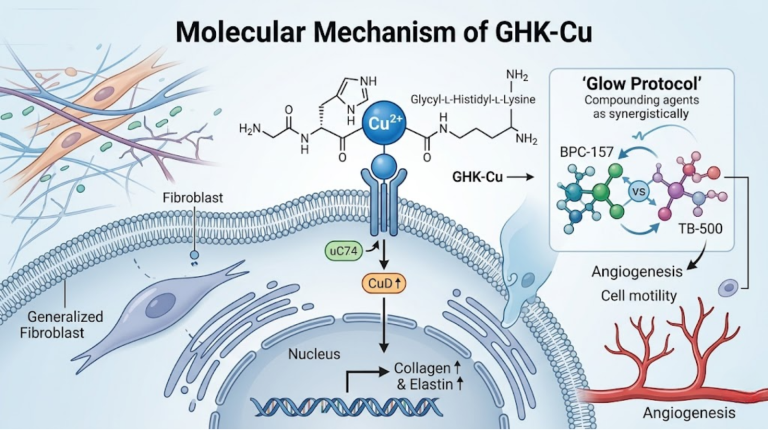
Disclaimer: The following information is strictly for educational purposes and Laboratory Research Use Only. The peptides and compounds discussed herein are not approved by the FDA for human consumption, cosmetic application, or medical treatment. All clinical mechanisms discussed refer to…
AHK-Cu vs. GHK-Cu: Decoding Molecular Differences for Lab Research & Advanced Biohacking
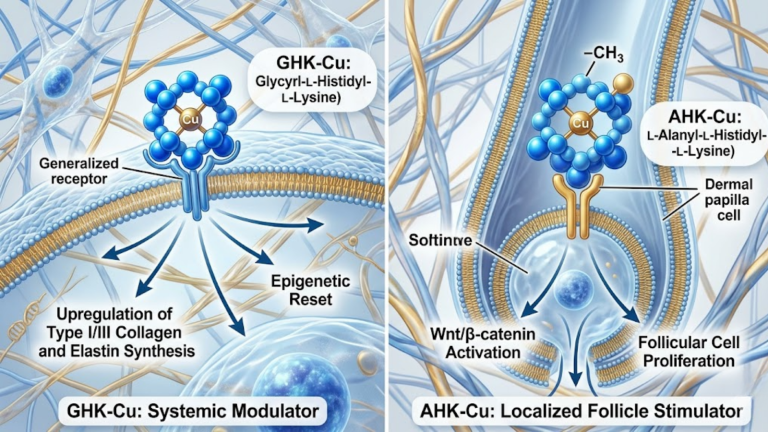
Disclaimer: The information provided in this article is for educational, informational, and analytical purposes only. The peptides discussed, including AHK-Cu and GHK-Cu, are strictly intended for laboratory research, in vitro diagnostics, and qualified scientific investigation. They are not approved by…
Sermorelin vs. BPC-157: Systemic Growth Factors vs. Localized Tissue Repair Mechanisms
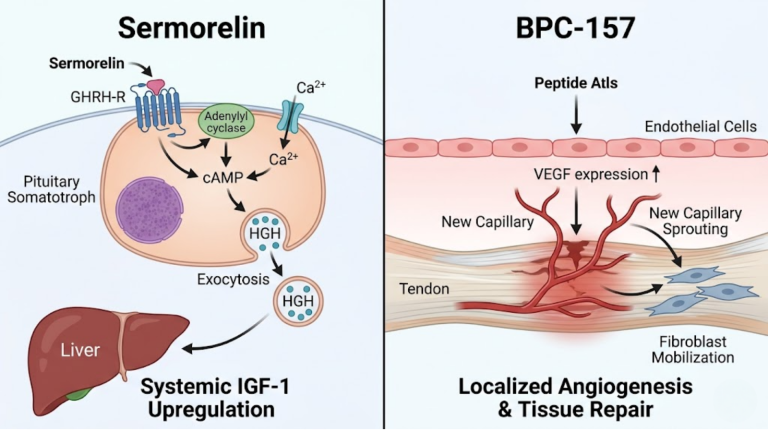
Sermorelin vs. BPC-157: Systemic Growth Factors vs. Localized Tissue Repair Mechanisms Sermorelin vs. BPC-157: Systemic Growth Factors vs. Localized Tissue Repair Mechanisms Table of Contents 1. Quick Answer: The Core Differences at a Glance 2. Introduction: The Evolution of Targeted…
BPC-157 vs. BPC-159: Molecular Differences, FDA Compliance, and Therapeutic Efficacy
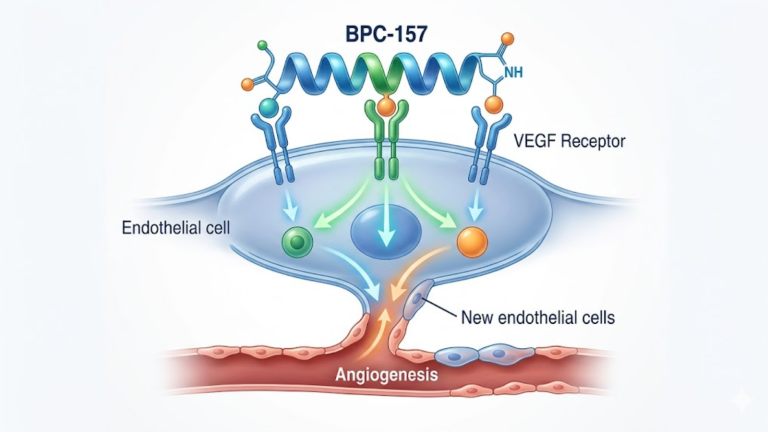
BPC-157 vs. BPC-159: Molecular Differences, FDA Compliance, and Therapeutic Efficacy Table of Contents Quick Answer: The Core Difference Introduction: The Peptide Shift What is BPC-157? The Foundation What is BPC-159? The Modern Alternative Molecular Differences: Comparative Analysis FDA Compliance and…
TB-500 vs. BPC-157: Mechanisms of Tissue Repair and Advanced Stack Protocols
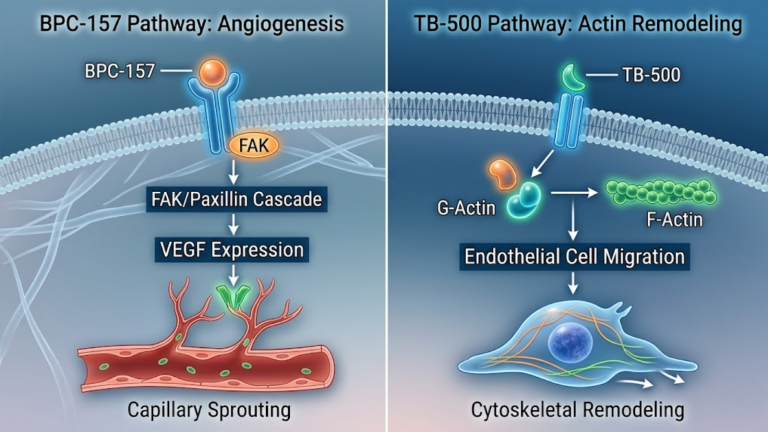
*Disclaimer: The following information is for educational and informational purposes only. The compounds discussed, including BPC-157 and TB-500, are strictly for laboratory research use only and are not approved by the FDA for human consumption, diagnosis, or treatment of any…
BPC-157 Oral vs. Injection: Pharmacokinetics, Bioavailability, and Healing Protocols
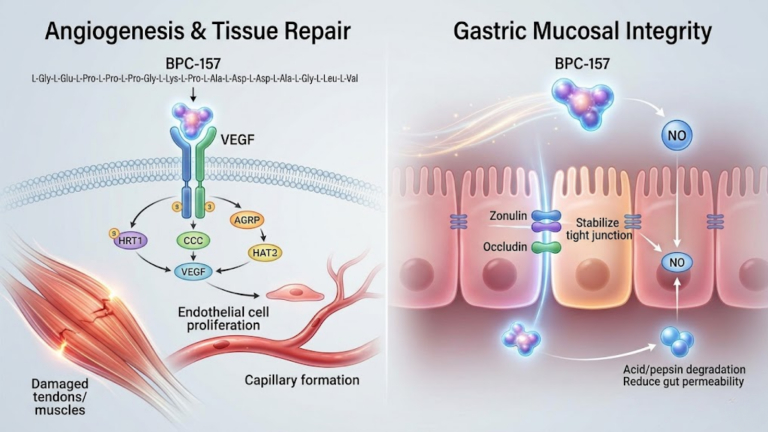
Disclaimer: The information provided in this article is for educational, analytical, and informational purposes only. BPC-157 is an investigational peptide not currently approved by the FDA for human therapeutic use. The content discussed herein explores experimental pharmacology, preclinical data, and…
Sermorelin vs. NAD+: Which Protocol Drives Better Cellular Regeneration and Longevity Outcomes?
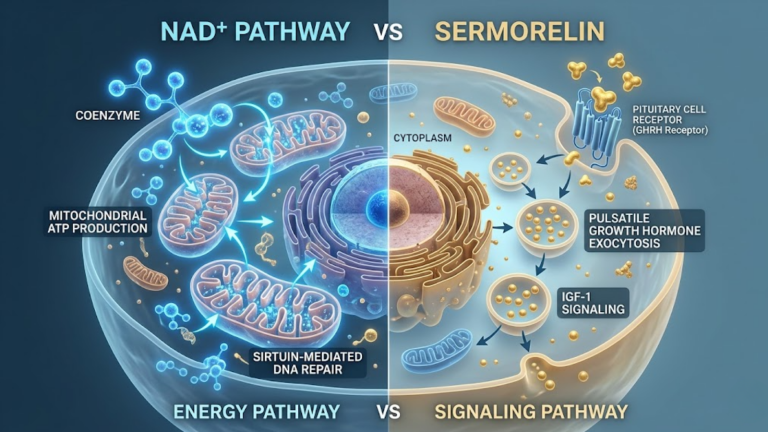
Disclaimer: The information provided in this article is for educational, clinical, and informational purposes only. Certain compounds discussed, including specific peptides, may be designated for Laboratory Research Use Only and are not approved by the FDA for human consumption or…
Sermorelin vs. Tesamorelin vs. Ipamorelin: The Definitive Guide to Mechanisms, Purity, and Protocols
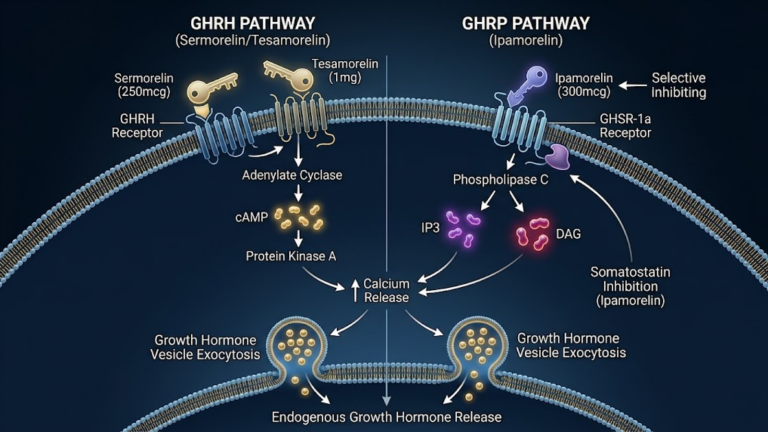
Sermorelin vs. Tesamorelin vs. Ipamorelin: The Definitive Guide to Mechanisms, Purity, and Protocols Sermorelin vs. Tesamorelin vs. Ipamorelin: The Definitive Guide to Mechanisms, Purity, and Protocols Table of Contents Quick Answer: Sermorelin vs Tesamorelin vs Ipamorelin Summary Introduction: The Evolution…